by Shafiq Khan | Nov 12, 2026 | Islamic
Madd (Elongation) in Noorani Qaida: A Beginner’s Guide Madd means stretching a vowel sound — a short “a” becomes a long “aa” — and in Noorani Qaida you first meet it as the long vowels Alif, Waw and Ya after a matching short vowel. It is...
by Shafiq Khan | Nov 12, 2026 | Islamic
Sukoon and Shaddah Explained: The Two Marks Beginners Mix Up Sukoon means “no vowel — stop on this letter”, and Shaddah means “double this letter — say it twice, once still and once with a vowel”. They look different, do opposite jobs, and both...
by Shafiq Khan | Nov 12, 2026 | Islamic
Tanween is a doubled vowel mark at the end of a word — it adds an “n” sound, so a word ending in Fatha becomes “an”, in Kasra becomes “in”, and in Damma becomes “un”. It looks like a small detail, and it is — but it...
by Shafiq Khan | Nov 12, 2026 | Islamic
Harakat are the small marks above and below Arabic letters that tell you which vowel sound to make — Fatha is “a”, Kasra is “i”, and Damma is “u” — and they are the first thing you learn after the letters. Without harakat, you can...
by Shafiq Khan | Nov 12, 2026 | Islamic
Arabic has 29 letters, each with its own sound and up to four written shapes — learning them by sound first, then shape, is the fastest way to start reading the Quran. The letters are the foundation of everything: every word, every verse, every page of the Quran is...
by Shafiq Khan | Nov 12, 2026 | Islamic
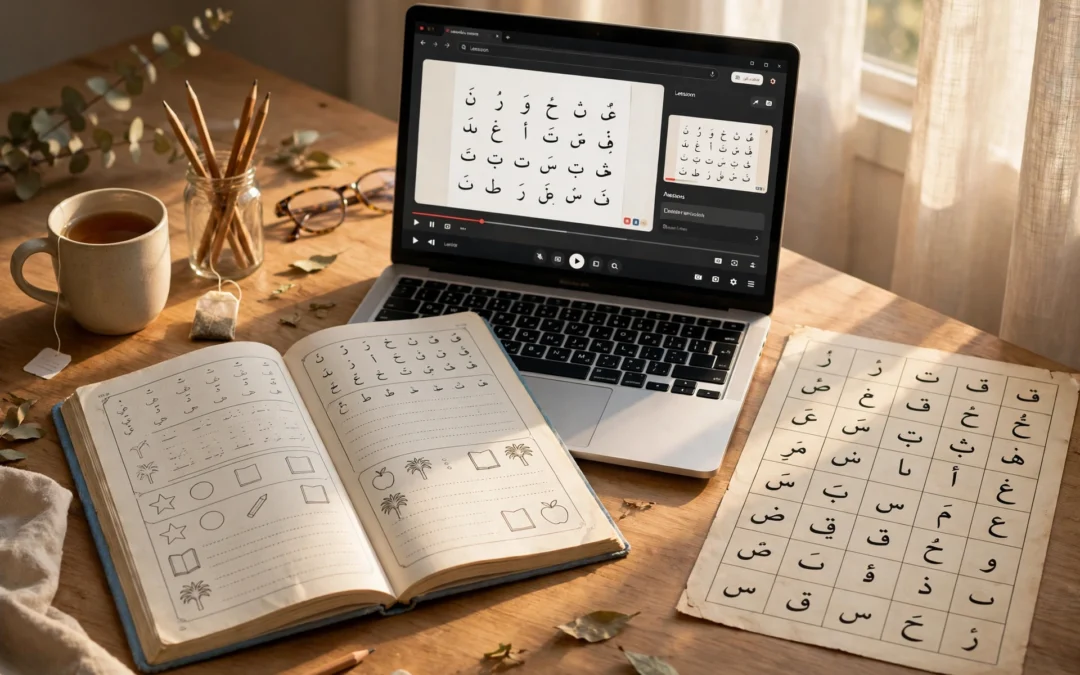
The 17 lessons run in a fixed order — single letters, joined letters, vowels, long vowels, sukoon, shaddah, and the first Tajweed rules — and each lesson assumes the one before it. If you know the order, you know exactly where you are, what you have covered, and what...